Tarot Learning
How to Learn Tarot Reading for Beginners: A Practical Roadmap
Adi · 2026-10-27
Learning tarot does not have to start with memorising 78 definitions. You can begin by understanding the deck, observing its pictures and building a small reflective practice. This roadmap is a suggested learning approach, not a deadline or a promise of professional ability.
1. Choose a deck you can study
Look for imagery you can see clearly and a guidebook that explains the cards. A beginner-friendly deck is one you can work with consistently, not necessarily the most expensive or visually elaborate one. Different decks and traditions use different names and imagery, so keep your reference material aligned with your deck.
2. Learn the structure before every meaning
A common modern deck has 22 Major Arcana and 56 Minor Arcana. The Minor Arcana contain four suits—Wands, Cups, Swords and Pentacles—with Ace through Ten and four court cards in each. Learning these groups gives you a map of the deck before you try to remember every individual interpretation.
3. Build a one-card practice
Pick a simple reflection prompt, such as “What perspective can I consider today?” Draw one card, notice the image and write a few observations before opening the guidebook. What is happening in the scene? Which symbols stand out? What might connect with your question?
Then read your reference and compare it with your first impressions. Record what seems useful and what does not fit. The aim is to practise interpretation, not to prove that the card predicted your day.
4. Move to a small spread
Once you are comfortable working with one card, try three positions: situation, perspective and next step. Name the positions before drawing, then interpret each card in its place. This is a reflective practice example, not a universal rule for tarot.
Ask how the cards relate to each other. Do they suggest a tension, a repeated theme or a different point of view? Avoid adding more and more cards simply because you dislike an answer. More cards do not automatically make an interpretation clearer.
5. Keep a useful journal
A short entry can include your question, cards, observations, interpretation and one practical takeaway. When you review it later, record what did not fit as well as what did. Balanced notes help you notice assumptions instead of only remembering apparent matches.
Practise with clear boundaries
If you read for someone else, ask for their consent and explain that you are learning. Do not claim to diagnose illness, reveal private facts about third parties or guarantee events. Keep personal information private and avoid pressuring anyone into decisions.
For your own readings, notice whether the practice feels constructive. If repeated draws create anxiety or make you dependent on cards for ordinary choices, pause. A deck should not replace qualified support or your ability to make decisions.
When might a course help?
A course can be an option if you want structured learning rather than piecing resources together. Before joining, check the published teaching format, content, current fee and terms. Ask about anything that is not clear; do not assume certification, mentoring hours or a particular outcome is included.
Learn Tarot with Adi
Mystic Light by Adi’s Tarot course introduces foundations, card meanings, spreads and practice. Explore the course page to decide whether its approach fits your interests. You can begin with curiosity and build your understanding gradually.
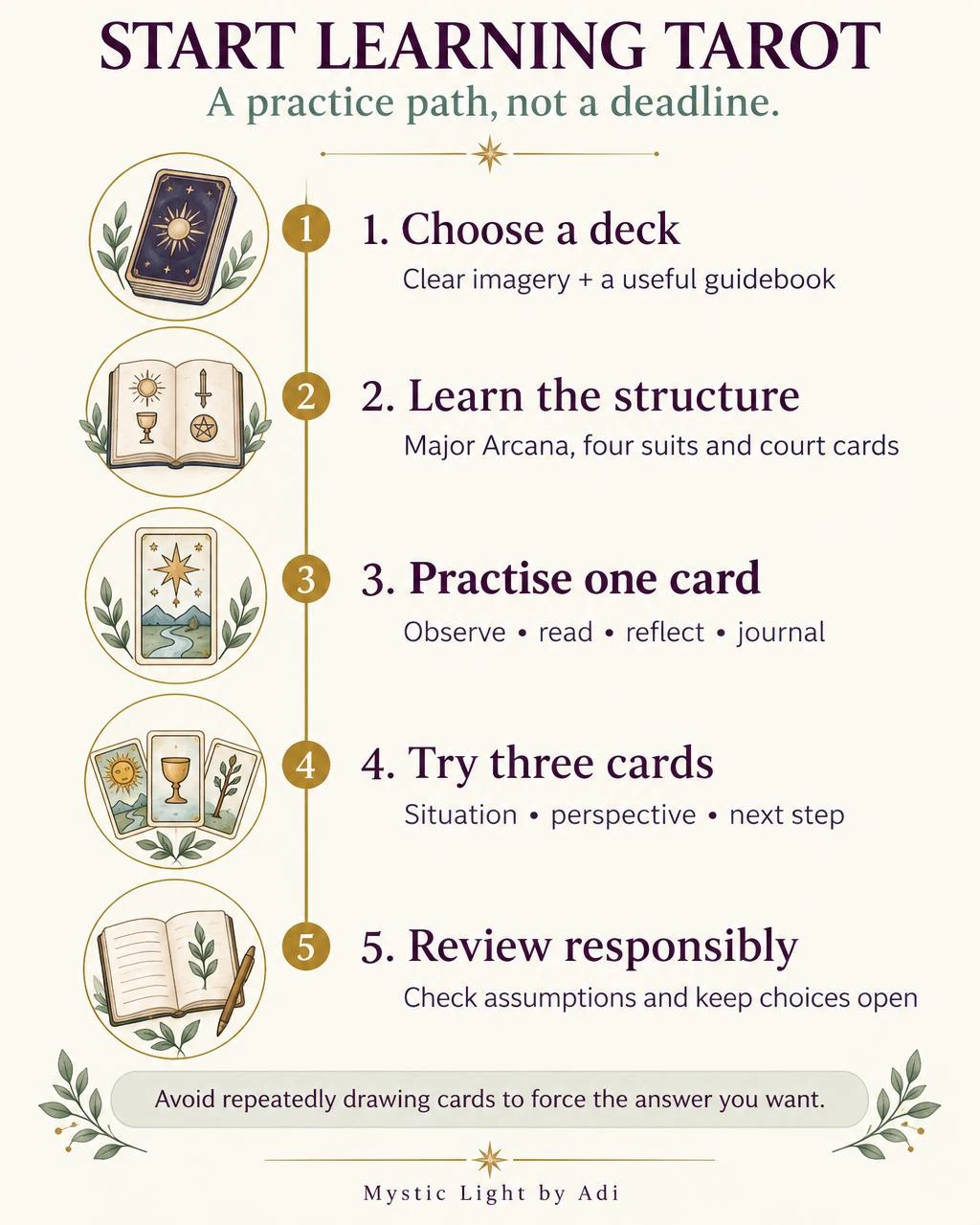
Image description: A five-step tarot learning path: choose a deck, learn its structure, practise one card, try three cards and review responsibly.